Looking back on scholarly publishing in 2025, one word keeps coming to mind: tension. Tension between speed and quality, innovation and inequality, AI assistance and human judgment.
As an editor and reviewer navigating both Global South and well-resourced publishing ecosystems, I often feel like I stand with one foot in each world. On one side, fast-evolving tools, polished workflows, and well-funded institutions. On the other hand, brilliant ideas struggle to cross barriers of language, cost, and visibility. 2025 did not erase that gap, but it made it more visible.
Peer Review in 2025: Faster, Smarter, and More Tired
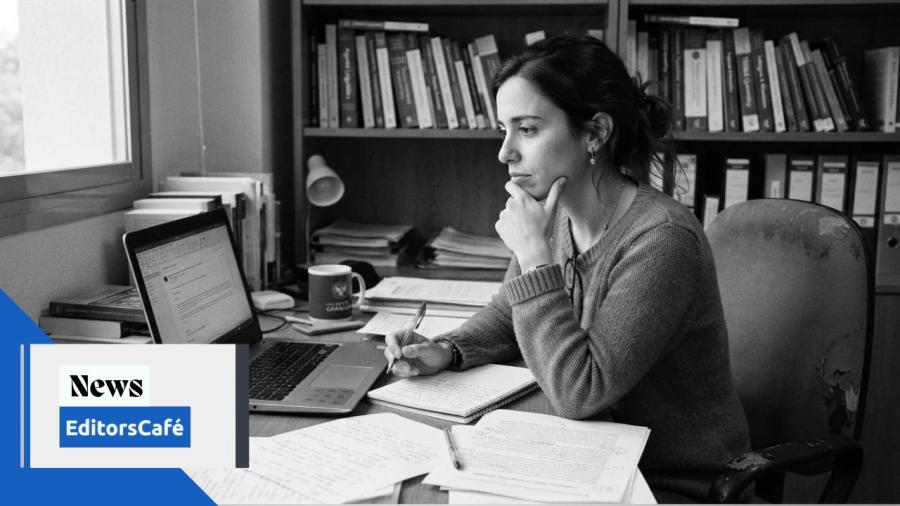
This year, peer review felt more “industrial” than ever. Turnaround expectations tightened, sometimes demanding initial decisions in days rather than weeks. Manuscripts are increasingly interdisciplinary, data-heavy, and often AI-assisted.
Two trends stood out: polished manuscripts that sometimes felt “empty” in insight, and reviewers increasingly exhausted, tempted to skim rather than deeply engage. AI has smoothed grammar and structure, but has not solved the problem of thinking. The most meaningful reviews were collaborative and nurturing, especially for early-career authors from under-resourced institutions.
AI in Editorial Workflows: Copilot, Not Autopilot
AI moved from the periphery to the core of editorial workflows. Authors rely on it to polish English, structure manuscripts, or draft cover letters, which is a lifeline for many non-native speakers. Editors use AI for triage, plagiarism checks, and flagging incomplete reporting.
These tools save time, but risk subtle bias, including under-representation of Global South scholarship, normalization of certain writing styles, and opaque triage systems. In 2025, I reaffirmed a principle: AI can assist, never decide. Human judgment must remain central.
Open Access: Hope, Hype, and Hard Realities
Open access remains a bright slogan, but its reality is uneven. More regional journals adopt OA, and preprints and open data gain recognition. Yet APCs remain prohibitive for many authors, and transformative agreements often exclude our universities. OA can inadvertently reinforce hierarchy, with well-funded authors gaining visibility, while underfunded authors are pushed elsewhere.
Stronger support for diamond OA models, regional APC funding pools, and local indexing platforms are crucial step toward equitable access.
Integrity Challenges: The New Subtleties
Integrity in 2025 is no longer just about plagiarism. I observed over-reliance on AI text, templated introductions, and strategic citation practices. Encouragingly, journals are increasingly clear about authorship, data availability, and conflicts of interest. Integrity now involves guiding communities through grey zones, with practices not malicious but misaligned with scholarly values.
Visibility and the Invisible South
Many high-quality Global South journals remain largely invisible. They struggle with indexing, submissions, and prestige. Editors often juggle journals on shoestring budgets, addressing urgent regional challenges that rarely appear in global outlets.
These journals matter, not as stepping stones, but as vital knowledge infrastructure. Partnerships that respect local identity, support capacity-building programs, and recognize regional impact are essential.
Looking Ahead to 2026
If 2025 was about disruption, 2026 should focus on alignment, between tools and values, policies and practice, metrics and meaning. AI should serve equity, open access should not exclude the under-resourced, and recognition should prioritize scholarship that helps communities.
The future of publishing cannot be designed only in Global North boardrooms. It must be co-created with those who understand limited bandwidth, unstable funding, and unlimited determination. AI will evolve, policies will shift, but keeping humans, especially under-heard communities, at the center can make scholarly publishing faster, smarter, fairer, and genuinely global.
Keywords
Scholarly publishing
Global South
peer review
AI in publishing
open access
research integrity
editorial workflows
academic visibility
Wulfran Fendzi Mbasso
Obtained a PhD thesis in Electrical Engineering, Option Optimization of Renewable Energy Systems. I am passionate about the field of Electrical Engineering and Industrial Informatics. I received several global certifications. My research focuses on power system control, optimization, automation, and electronics. I am a dedicated PhD holder in renewable energy optimization. I possess extensive electronics, electrical engineering, telecommunications, and automation experience. My research involves innovative ways to optimize renewable energy use for a sustainable future. I develop advanced energy efficiency methods due to my expertise in these areas. My collaboration with international researchers has given me a broad view of research in several electrical engineering fields. This partnership has led to articles in Renewable Energy Systems, Energy Control, and Electricity Quality. I act as a reviewer for IJRER, Heliyon, Hindawi, AJEBA, and Sustainable Energy Research. I am also active on ResearchGate, where I support science and engineering with my humble perspective.
The views and opinions expressed in this article are those of the author(s) and do not necessarily reflect the official policy or position of their affiliated institutions, the Asian Council of Science Editors (ACSE), or the Editor’s Café editorial team.
Comments
Abdul Syahid
03 December, 2025
A thoughtful reflection. The points about AI’s uneven benefits, reviewer fatigue, and the continuing invisibility of Global South scholarship resonate strongly with my own experience. I especially agree that AI should assist but never replace human judgment, and that equitable OA models are essential if we want a truly global publishing ecosystem.
HIN LYHOUR
04 December, 2025
The article clearly shows the challenges between strong and struggling research communities. It reminds us that AI and publishing systems should support fairness, helping make voices of the Global South heard and more visible.
Samia Saad El Maghraby
04 December, 2025
Thank you, Dr. Wulfran Fendzi Mbasso, for this insightful reflection. I fully agree that AI should assist, not replace human judgment, and that open access, while promising, remains uneven for Global South authors. High-quality regional journals are vital knowledge infrastructure, and supporting them through capacity-building, partnerships, and equitable OA models is essential. Scholarly publishing must prioritize inclusion and fairness to become truly global.
Abdelazim Negm
11 December, 2025
Very nice article and thought. I fully agree with the closing section headed "Looking Ahead to 2026".
Kaushik Bharati
08 May, 2026
The article offers a thoughtful and timely reflection on the uneasy intersection of AI, Open Access, and global academic inequality. What stands out most is its honest recognition that while AI can speed up peer review and editorial work, it cannot replace human judgment, ethical responsibility, or scholarly trust. The discussion on the “invisible South” is especially important. Many high-quality journals from the Global South still struggle for recognition, funding, and visibility despite producing valuable research relevant to local realities. The article rightly challenges the assumption that innovation is happening only in the Global North. It also avoids both blind optimism and fear about AI, presenting a balanced view of its promise and risks. The emphasis on accountability and integrity in publishing is particularly relevant for 2026, when automation will likely become even more influential in scholarly communication. Overall, this is an incisive and accessible piece that encourages readers to think critically about who benefits from technological change in academic publishing and who is likely to remain unheard.
Leave a Comment
Your email address will not be published. Required fields are marked *



Abdul Syahid
03 December, 2025A thoughtful reflection. The points about AI’s uneven benefits, reviewer fatigue, and the continuing invisibility of Global South scholarship resonate strongly with my own experience. I especially agree that AI should assist but never replace human judgment, and that equitable OA models are essential if we want a truly global publishing ecosystem.