Leave a Comment
Your email address will not be published. Required fields are marked *

I want to start with a confession. When I published my first research paper in 2023, I did not sleep the night before it went live. I kept refreshing the journal's website, waiting for the article to appear. When it finally did, I called my mother. She did not understand the title. She did not understand the abstract. But she understood that her son, who had studied in a small town in Assam, had written something that someone, somewhere, might read. That moment, more than any citation or impact factor, is why I believe in the power of scholarly publishing.
I share this because I think we sometimes forget what we are really doing. We talk about workflows and metadata and peer review timelines. We argue about open access models and APC waivers. We chase indexing and impact metrics. All of that matter. But underneath it all is a simple human truth: someone has something to say, and someone else might need to hear it. That is the heart of what we do.
I have spent the last few years working at the intersection of education, technology, and publishing. I have served on editorial boards for journals in Indonesia, the United States, and beyond. I have reviewed more than sixty manuscripts for Scopus and Web of Science indexed journals. I have spoken at conferences in Indonesia, the Philippines, and Taiwan about artificial intelligence in education. I have conducted research with IIT Guwahati on a government initiative called Gyan Dhara. I have written books that have been recommended by universities in Delhi and Pune, acquired by libraries in Macau and Taiwan, and even slated for translation into traditional Chinese.
None of this makes me an expert on everything. But it does give me a particular vantage point. I see publishing from the ground up, from small colleges in Assam to international editorial boards. And from where I stand, I can tell you: something is shifting. Not loudly. Not all at once. But it is real, and it is happening now.
This is my attempt to describe what I see. I write it not as a prediction from a distant observer but as a reflection from someone who is in the middle of it, still learning, still making mistakes, still surprised by what I find.
Let me begin with something uncomfortable. The phrase "publish or perish" has been around for so long that it has become almost invisible. We accept it as a law of nature. Academics must publish. If they do not, they will not get promoted. They will not get tenure. They will not get grants. Their careers will stall.
I understand this pressure. I have felt it. When I was teaching at Bongaigaon College and later at SBM College, I knew that my future depended on producing research. I also knew that I was working in a system that did not always support research. Teaching loads were heavy. Library resources were limited. Research funding was scarce. And yet the expectation remained.
But here is what I have noticed. The younger researchers I meet, the ones who are just starting out, are asking different questions. They are not just asking "How do I get published?" They are asking "Does my research matter?" They want their work to be read, not just counted. They want their findings to reach people who can use them. They want their grandmothers, their students, their neighbours to understand what they have discovered.
This is not a lowering of standards. It is a raising of purpose. And I believe it is one of the most important trends shaping our field.
I saw this clearly at a conference in Indonesia last year. A young researcher presented a study on local language education. Her methodology was sound. Her findings were interesting. But what struck me was her final slide. It was a photograph of her students, smiling, holding books in their own language. She said, "This is why I do this." Not for the citation. Not for the promotion. For those children.
Journals and publishers that understand this hunger will thrive. Those that continue to treat authors as content providers, as numbers in a database, will find themselves increasingly irrelevant. The future belongs to those who remember that research is a human activity.
I have worked with artificial intelligence in education for several years now, including running workshops on AI and data science for educators. I have seen firsthand how these technologies can transform learning. But I have also seen how they can be misunderstood. And I want to be honest about this because I think it matters for publishing.
I don't believe AI is going to replace researchers. It is not going to write the next great breakthrough in education or psychology or literature. What it can do is help researchers work more efficiently. It can check grammar. It can format references. It can search literature. It can translate abstracts. It can identify patterns in data that a human might miss.
These are real benefits, and I have used them myself. When I was working on my book "How AI Revolutionizes Regional Language Education," I used AI tools to help me organize my thoughts and find connections I might have overlooked. They did not write the book. They helped me write it better.
But here is the danger. AI can also become a crutch. It can become an excuse to stop thinking deeply. I have reviewed papers where the writing was technically correct but the ideas were hollow. The sentences were polished but empty. The structure was perfect but the soul was missing. These papers, I suspect, were written by AI with minimal human input. They passed the grammar check. They failed the truth test.
The best journals, the ones that will shape our field, will be those that use AI wisely. They will use it to speed up routine tasks. They will use it to check for plagiarism and image manipulation. They will use it to help reviewers find relevant expertise. But they will not use it to replace human judgment. They will not use it to automate peer review. They will not pretend that a machine can understand the nuances of a qualitative study or the beauty of a well-crafted argument.
I said this at a conference in Taiwan last November, and a young scholar came up to me afterwards. She said, "I use AI to help me write, but I always ask myself: is this still my voice?" That, I think, is the right question. Not "Can AI write?" but "Can I still hear myself in what I write?"
I want to talk about language. This is personal for me.
I grew up speaking Assamese. I learned Hindi and English in school. I now write primarily in English because that is the language of international scholarship. But I have never forgotten the richness of my mother tongue. I have never forgotten the stories my grandmother told me, the songs I learned as a child, the way certain ideas can only be expressed in certain languages.
For too long, scholarly publishing has been dominated by English. This is not a criticism of English. It is a practical reality. English is the lingua franca of global research. But it has also created barriers. Researchers who do not speak English fluently are often excluded. Research that is published in other languages is often ignored. Knowledge that is produced in the Global South is often invisible to the Global North.
I see this in my own work. I have published in journals indexed in Scopus and Web of Science. I have also published books that have been recommended by universities in India, acquired by libraries in Macau, and translated into traditional Chinese. But I have also written in Assamese. I have spoken at conferences in Bahasa Indonesia. I have worked with colleagues in the Philippines who publish in Tagalog.
The coming years, I believe, will bring a push for multilingual publishing. Not just translating abstracts into English. Not just adding a second language to the title. But publishing full articles in regional languages with English summaries. Inviting editors from diverse linguistic backgrounds. Creating spaces where knowledge can flow in multiple directions.
I saw a glimpse of this at the Madurai Symposium in 2025. “I was invited as a resource person for an education conclave organised by the DHAN Foundation, themed around community-centred, equitable student learning”. What struck me was the mix of languages in the room. Tamil. Hindi. English. Each one carried its own knowledge. Each one was respected.
This is the future I want to see. Not English dominating. Not regional languages being sidelined. But a genuine multilingual ecology where knowledge can move freely across borders and tongues.
Open access has been a rallying cry for years. And it has achieved a great deal. Research that was once locked behind paywalls is now freely available. Scholars in low-income countries can access articles they could never afford. The public can read the findings of studies they funded through their taxes.
But I have also seen the limitations of open access. I have seen how it can become a pay-to-play system. Journals that charge authors thousands of dollars to publish, effectively excluding those without funding. Publishers that make articles "open" but keep the underlying data locked away. In my view, some platforms that claim to be open are, in practice, controlled by a handful of corporations.
The next step, I believe, is not just open access to articles. It is open dialogue between everyone involved in the publishing process.
Let me explain what I mean. Right now, peer review is often a black box. An author submits a paper. An editor sends it to reviewers. The reviewers write reports. The editor makes a decision. The author receives a verdict, often without knowing who reviewed the paper or why certain comments were made. The reviewers remain anonymous. The process remains opaque.
I have been on both sides of this. I have submitted papers and waited months for a decision. I have reviewed papers and spent hours writing detailed feedback. I have served on editorial boards and seen how decisions get made. And I can tell you: the system works, but it could work better.
The journals that will shape the future will be those that treat peer review as a conversation, not a judgment. They will offer mentorship to early-career researchers. They will publish reviewer reports alongside articles so that readers can see the discussion. They will create spaces for authors to respond to criticism. They will recognize that reviewers are not gatekeepers but collaborators.
I have seen this happen in small ways. Some journals now offer "transparent peer review" where the reports are published. Some editors now work with authors to improve papers rather than simply rejecting them. Some reviewers now sign their reports, taking responsibility for their comments. These are small steps, but they matter.
I remember a paper I reviewed last year. It was from a young researcher in a small college. The methodology was flawed. The writing was unclear. I could have rejected it outright. But instead, I wrote a detailed report explaining what needed to change. I suggested readings. I offered examples. I told the author that I believed in the topic and wanted to help.
The paper came back six months later. It was transformed. The methodology was sound. The writing was clear. The author thanked me in the acknowledgements. That, for me, is what peer review should be. Not a gate. A bridge.
My editorial board experience spans several journals: I have been a regional editor for the Journal of Comparative & International Higher Education, an editorial advisory board member for the Journal of Underrepresented and Minority Progress, and a section editor for the International Journal for Innovation Education and Research.
Each of these roles has taught me something different. But they have all taught me the same lesson: editing is not just about selecting papers. It is about building community.
When I receive a submission, I do not just see a manuscript. I see a person. Someone who has spent months, sometimes years, working on this project. Someone who has something to say. Someone who is hoping to be heard.
I try to remember this in every decision I make. When I invite reviewers, I try to find people who will be tough but kind. When I write decision letters, I try to explain my reasoning clearly. When I reject a paper, I try to offer suggestions for improvement. When I accept a paper, I try to celebrate the achievement.
This is not just good practice. It is what keeps a journal community alive. Authors who feel respected will submit again. Reviewers who feel valued will review again. Readers who feel connected will return again. The journals that understand this are more likely to build loyal communities. Those that do not may find it harder to keep them.
I have seen this in my own experience. When I was invited to join the editorial advisory board of ERUDIO Journal of Educational Innovation, I was not just honoured. I was excited. Here was a journal that valued my perspective. Here was a community that wanted to hear from someone like me, from a small town in Assam, from a background in education and psychology, from someone who had worked at the margins of the academic world.
That is the kind of community I want to help build. Not a closed circle of elites. Not a machine for processing papers. But a genuine community of scholars, working together to advance knowledge.
I want to end with a story.
Last year, I was invited to speak at the International Conference on Educational Innovation at National Tsing Hua University in Taiwan. I was nervous. This was a big stage. These were important people. I worried that I did not belong.
But when I arrived, something unexpected happened. A professor came up to me and said, "I read your book on AI and regional language education. It helped me understand something I had been struggling with." A student told me that my presentation had given her an idea for her thesis. A colleague from another university asked if we could collaborate.
I realized then that I had been thinking about this all wrong. I had been thinking about publishing as a competition. Who has the most citations? Who has the highest h-index? Who has the most prestigious affiliation? But that is not what matters. What matters is connection. What matters is contribution. What matters is whether your work helps someone else see the world a little differently.
This is what I believe the future of scholarly publishing should be. Not faster algorithms. Not bigger databases. Not more metrics. But more connection. More contribution. More humanity.
The trends I have described in this essay, the rise of diverse voices, the thoughtful use of AI, the push for multilingual publishing, the call for open dialogue, are all part of this larger shift. They are all ways of remembering that research is a human activity. That behind every paper is a person. That behind every citation is a conversation. That behind every journal is a community.
If we get this right, the coming years will be the most exciting in the history of scholarly publishing. If we get it wrong, we will just have more papers, more noise, and less meaning.
I know which future I am working for. I hope you will join me.
I am not a senior scholar. I am not a journal editor-in-chief. I am not a publishing executive. I am someone who has been fortunate enough to work across borders and disciplines, to serve on editorial boards and review committees, to speak at conferences and write books. I have made mistakes. I have learned from them. I am still learning.
What I offer here is not a prediction. It is a reflection — one shaped by hope that publishing is becoming more inclusive, more thoughtful about technology, and more open across languages and reviewers alike.
I believe in this work. I believe in the power of words to change minds, to open hearts, to build bridges. I believe that what we do matters. And I believe that the future of scholarly publishing will be shaped not by algorithms or metrics but by people, people like you, people like me, people who care about knowledge and truth and connection.
So let us get to work, there is good publishing still to be done.
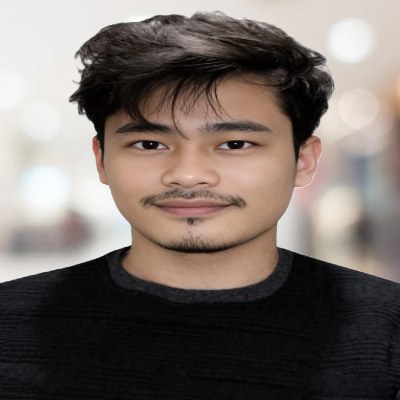
Khritish Swargiary is a Lecturer in Education and a UGC-NET-qualified researcher. He serves on the editorial advisory boards of several international journals and is actively engaged in teaching, research, academic writing, and scholarly publishing. His academic interests encompass education, research, and interdisciplinary scholarship.
View All Posts by Khritish SwargiaryThe views and opinions expressed in this article are those of the author(s) and do not necessarily reflect the official policy or position of their affiliated institutions, the Asian Council of Science Editors (ACSE), or the Editor’s Café editorial team.

Introduction Scientific research is commonly evaluated through publications, citations, conference participation, an...
Read more ⟶
Open Access (OA) publishing has catalyzed a profound shift in academic discourse by reducing paywall and subscription barrier...
Read more ⟶
Picture an early-career researcher in Nigeria with everything that matters: a well-formed question, a working laboratory, a d...
Read more ⟶