
Leave a Comment
Your email address will not be published. Required fields are marked *

Picture an early-career researcher in Nigeria with everything that matters: a well-formed question, a working laboratory, a dataset she collected herself, and the determination to publish. She has already overcome the odds that shape research in many Nigerian institutions - unstable power, scarce funding, and thin technical support. Yet as she interprets her results, she meets the first gate: the papers she needs sit behind a paywall her institution cannot easily afford. Weeks later, when her manuscript is accepted, she meets the second: an article processing charge priced in a currency her salary is not paid in.
Nothing about her science failed. What failed her was the economics surrounding it. The cost of knowledge is not a single price tag on an article; it is an accumulated toll imposed at every stage of the research journey. In Nigeria, as across much of Africa, that toll quietly determines not only who can read knowledge, but who can produce it—and whose work the world gets to see.
Initiatives such as Research4Life partly address the first gate. Nigeria is classified in Research4Life’s Group B “low-cost access” tier: eligible institutions pay USD 1,500 per year, compared with free access for institutions in Group A countries. This is a meaningful subsidy, but it still requires institutional resources, registration, and continuity of payment- conditions that many underfunded Nigerian institutions cannot reliably meet. And even where reading access is secured, the second gate remains: Research4Life does not pay an author’s APC.
If knowledge is meant to be open, the question is not only who can afford to read it. It is who can afford to create, validate, and publish it.
Research is built on research. Yet for researchers at institutions such as mine with limited library budgets, the current literature is often the hardest thing to obtain.
The irony is sharp: we need access to knowledge to create knowledge. When a researcher cannot read the latest work in her field, her literature review narrows and her methods may unknowingly repeat what others have already done. The gap becomes one of training, of innovation, of the very questions a research community believes it can ask.
The unread paper is not expensive because it was expensive to write. Much of the underlying research was publicly funded somewhere, and much of the labour - peer review, editing - was donated by academics like us. Many researchers in my environment spend hours each week searching for legally accessible versions of papers; that time is a cost too, though no invoice records it.
The conversation about research costs in Africa usually jumps to publishing. But for researchers like me, publishing is the last toll on a long road.
Long before a manuscript exists, there are reagents and consumables that are frequently imported and priced in hard currencies. Equipment must be maintained without easy access to engineers or spare parts, so a single fault can idle a laboratory for months. Internet connectivity is a recurring expense paid out of our own pocket more often than any accounting acknowledges. Software and bioinformatics resources can be priced beyond what under-resourced institutions can easily absorb. Fieldwork means sample collection, preservation, and transport across far and difficult distances. Research assistants keep projects alive, frequently on short contracts often on short contracts or on goodwill. And there are the costs of belonging to science at all: conference travel that can strain a researcher's annual income, language editing for those of us writing in a second or third language, and the administrative work that turns a dataset into a submission.
None of these costs is unique to Africa. What is different is their proportion. The price of a reagent is global; the capacity to absorb it, is not.
Open access has fundamentally altered the economics of scholarly readership: for readers, the barrier of subscription paywalls has been substantially reduced, and in many fields the immediate availability of research has become an expected norm. Yet the transition from reader-pays to author-pays publishing has introduced a new and unevenly distributed financial threshold at the point of publication.
Article processing charges (APCs) are most closely associated with gold open access, under which an article is made immediately available upon payment of a publication fee by the author, their funder, or their institution. This model, however, represents only one configuration within a heterogeneous publishing ecosystem. No-fee journals, Diamond open access platforms supported by institutions or scholarly communities, APC waivers and discounts, and transformative agreements all offer alternative routes to open dissemination. These models demonstrate that open access is not synonymous with author-pays publishing. Nevertheless, they have not uniformly displaced APC-based models, particularly in high-prestige and high-visibility venues.
The consequences of this financial threshold are consequential for research careers and the distribution of scholarly voice. A researcher with methodologically sound, publishable work may delay submission while seeking funds; divert limited grant resources from research activities to publication fees; or select a less visible journal not because it offers the most appropriate disciplinary or editorial fit, but because it is financially accessible. The first scenario is readily observed in practice; the broader distributional pattern requires more systematic empirical evidence. Even so, the mechanism is straightforward: where publication depends on payment, access to scholarly visibility becomes partially contingent on personal, institutional, or national financial capacity.
This produces a paradox at the heart of contemporary open access. A system designed to remove barriers for readers may reproduce, in modified form, barriers for authors. The problem is especially acute where local currencies depreciate against the currencies in which APCs are denominated. A fee that appears stable in US dollars or euros may become substantially more burdensome in real terms for a researcher whose salary is paid in, for example, Nigerian naira and has not adjusted correspondingly.
Openness purchased at the point of authorship is therefore only as open as the author’s capacity to pay. A model that liberates the reader by charging the author risks substituting one form of inequity for another—one that remains largely invisible to those for whom the cost is negligible.
There is a final cost that no invoice captures: the cost of being unseen.
If research produced in Africa is to matter globally, it must be Accessible, visible, discoverable, and valued are four different things,” with indexing, metadata, language, and citation examples. African researchers study questions of enormous significance; neglected tropical diseases, crop resilience in a changing climate, biodiversity, indigenous knowledge systems, public health delivery under constraint. These are not "local" topics; they are global questions in which our continent is often the world's laboratory.
Yet the publishing system tends to reward research framed for the priorities of wealthy countries. When a study of a regionally important disease struggles to find a "high-impact" home, the incentive structure quietly teaches African researchers to study other people's problems. Openness without visibility is an empty gift. The question is not only "can the world read our work?" but "does the system consider our questions worth asking?"
Every researcher in my environment keeps two ledgers. One is official: grant income, expenditure, receipts. The other is unwritten: the personal money quietly spent to keep a project running, the evenings spent hunting for an accessible version of a paper, the articles exchanged through informal networks because institutional access does not exist.
This is not a complaint about generosity. African research communities have built extraordinary cultures of sharing precisely because formal systems did not serve them - that is ingenuity, and it deserves recognition rather than pity.
But we should name what that ingenuity is subsidising: peer review is largely uncompensated everywhere, yet reviewing a journal you cannot afford to read is a particular irony. Much of the invisible labour that keeps scholarly publishing functioning - reviewing, editing, mentoring - is performed by people the system's economics treat as marginal. And there is an emotional cost we rarely discuss: the slow accumulation of small refusals - the grant not won, the fee not payable, the infrastructure not available - that erodes even the most determined early-career researcher.
Everything above needs one qualification: there is no single "African research environment."
A researcher at a well-funded university with strong institutional subscriptions lives in a different reality from a colleague at a teaching-focused college elsewhere on the continent. Currency strength varies enormously, so the same APC is a different burden in Lagos, Nairobi, and Kigali. National policies differ: some governments have invested deliberately in research funding, repositories, and connectivity; others have not. Institutions within the same city differ in subscriptions, bandwidth, laboratory capacity, and publishing support - and disciplines differ too, since a computational scientist needs bandwidth and software while a plant biotechnologist like me needs cold chains and transport.
Solutions designed for "Africa" as an abstraction will miss the researcher they were meant to reach. Equity begins with specificity.
I refuse to end in complaint, because the path forward is visible.
For funders and publishers: expand Diamond Open Access, where neither reader nor author pays, and fund it sustainably - as infrastructure, not charity. Make APC waivers automatic, meaningful, and stigma-free for researchers in low- and middle-income countries, rather than a bureaucratic hurdle many will not attempt.
For African governments and universities: invest in our own journals, repositories, and publishing infrastructure, so African scholarship does not depend on the goodwill of others to exist. National and regional licensing of research databases, negotiated collectively, would do for access what individual institutions cannot do alone.
For institutions and researchers: build repositories with responsible preprint policies, and make them easy to deposit into and easy to find. For international partners: treat African institutions as co-designers of the system, not as recipients of its leftovers.
A genuinely equitable Open Access system is not one where everything is free, because knowledge has always cost something to create. It is one where those costs are not concentrated according to geography or financial strength; where a researcher's contribution to the record of human knowledge is limited only by the quality of her ideas, never by the strength of her currency.
My colleague at the paywall - the one with the question, the data, and the determination - does not need our sympathy. She needs a system that stops charging her extra at every gate. The cost of knowledge, in the end, is a choice about what we value. This Open Access Week, let us choose to value the people who create knowledge as much as the knowledge itself.
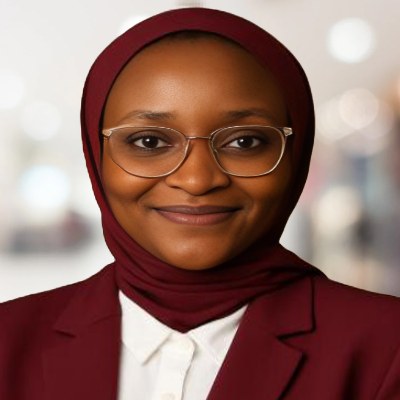
Aisha Abdullahi Mahmud is a doctoral researcher in plant biotechnology at the Technical University of Munich, working on plant–microbe interactions and bioinformatics-driven approaches to crop resilience. A multilingual scientist writing at the intersection of language and technology, she believes AI should amplify voices, not standardize them.
View All Posts by Aisha Abdullahi MahmudThe views and opinions expressed in this article are those of the author(s) and do not necessarily reflect the official policy or position of their affiliated institutions, the Asian Council of Science Editors (ACSE), or the Editor’s Café editorial team.


The dissemination of scientific knowledge has been transformed by Open Access. It can reduce barriers to scientific informati...
Read more ⟶
Open access has widened readers’ access to research, but it has also changed who pays. In many models, the cost has moved f...
Read more ⟶
Scholarly publishing is under pressure from several directions at once: the economics of open access, strained peer review, f...
Read more ⟶