Leave a Comment
Your email address will not be published. Required fields are marked *

The dissemination of scientific knowledge has been transformed by Open Access. It can reduce barriers to scientific information and promote international cooperation by making research more easily accessible. However, free access for readers does not always mean free publication for authors. Many journals recover their costs through Article Processing Charges (APCs), paid by authors, their institutions, or their funders, and this can be a significant obstacle for researchers with limited funding. From the perspective of a public-sector university such as the Balochistan University of Information Technology, Engineering and Management Sciences (BUITEMS), the question is not only whether research should be openly accessible, but also who can afford to publish that research openly.
At BUITEMS, researchers work across diverse areas including Biotechnology, Microbiology, Environmental Sciences, Molecular Biology, Genetics, Cancer Genomics, Forensic Science, and Public Health. Their work addresses significant issues such as infectious diseases, environmental pollution, microbial diversity, climate and sustainability, genetic disorders, and cancer.
Not every Open Access journal charges APCs. Diamond Open Access journals charge neither authors nor readers, and a 2024 industry analysis found that about 31% of sampled fully Open Access journals had no APC. But many respected journals do charge, and fees vary widely by publisher, discipline, and journal. An early study of APC-charging journals listed in the Directory of Open Access Journals found prices from about 20 to 3,800 US dollars, and the same 2024 analysis put the highest fully Open Access list price at 8,900 dollars. Pakistan also has indexed journals with low or no charges, so the concern is not that every venue is unaffordable, but that higher-priced journals may be out of reach for researchers without dedicated funds. A possible situation is this: a study is completed, a manuscript drafted, and peer review passed, only for the APC, which may only fall due after acceptance, to exceed the available research funding. The researcher may then look for a different journal, ask for a fee waiver, delay publication, or, occasionally, pay the fee personally.
Researchers in resource-limited settings can offer important insights into questions that directly affect their communities. Studies from Balochistan and other marginalized areas of Pakistan, for instance, can offer insights into environmental conditions, microbial populations, infectious diseases, genetics, cancer, nutrition, and public health.This research also contributes to overcoming thelack of representation of South Asian populations in global scientific literature and databases. Yet high APCs may make it harder for researchers at resource-limited institutions to share their findings with the international scientific community.
Numerous publishers offer APC waivers or discounts to researchers hailing from low- and middle-income nations. These efforts are important, yet they do not consistently address the issue. A fairer method could consider not only national economic categories but also institutional research capacity and the funding available. This is the author’s proposal rather than an existing standard.
Diamond Open Access is a publishing model in which journals charge neither authors nor readers. Costs are covered by universities, research centres, scholarly societies or other non-commercial funders. It is one model of Open Access, not a synonym for all of it. Public universities in Pakistan could consider supporting such journals as one way to share research in biotechnology, microbiology, environmental sciences and public health without charging authors. This is a proposal for discussion rather than a description of existing practice at BUITEMS. Diamond journals are not cost-free to run, however. They need sustained financial and institutional support, reliable publishing infrastructure, and the commitments of any credible journal: rigorous peer review, research integrity, transparent editorial policies, and high scientific standards.
No university can remove every barrier, but some measures are realistic within limited budgets. These are suggestions for BUITEMS and other public-sector universities to consider, not existing initiatives. An institutional repository, run with the library, can make research outputs publicly available where publisher policies allow, which improves access but does not pay APCs. Dedicated publication funds, even modest ones, could support researchers whose grants cannot cover charges, with transparent criteria set by research offices. Libraries and administrations could also pursue discounted publishing agreements. Better research support and guidance on ethical Open Access publishing could help researchers increase the visibility of their work and make informed choices about where to publish, including journals with low or no charges.
Open Access rests on an essential idea: research findings should be accessible throughout the research community. Removing paywalls for readers is not enough, because the cost of knowledge also includes the institutional and financial obstacles researchers face in creating and sharing it.
The expense of obtaining a research article is just one aspect of the "cost of knowledge." It also covers the institutional and financial obstacles that researchers encounter while creating and sharing knowledge. Open Access could greatly increase global awareness of research from BUITEMS and other public-sector universities in Pakistan in biotechnology, microbiology, environmental sciences, genetics, cancer research, and public health. However, equity must be added to accessibility. Financial obstacles should not prohibit researchers from Balochistan and other marginalized areas from publishing their work, giving them an equal chance to contribute to global science.

Dr. Shakeela Daud is Professor of Biotechnology at Balochistan University of Information Technology, Engineering and Management Sciences (BUITEMS), Pakistan. She is an HEC-approved PhD Supervisor whose research focuses on molecular genetics, cancer genomics, public health genomics, forensic genetics, and research capacity building. She has extensive experience in higher education, research supervision, academic leadership, and scholarly publishing.
View All Posts by Shakeela DaudThe views and opinions expressed in this article are those of the author(s) and do not necessarily reflect the official policy or position of their affiliated institutions, the Asian Council of Science Editors (ACSE), or the Editor’s Café editorial team.

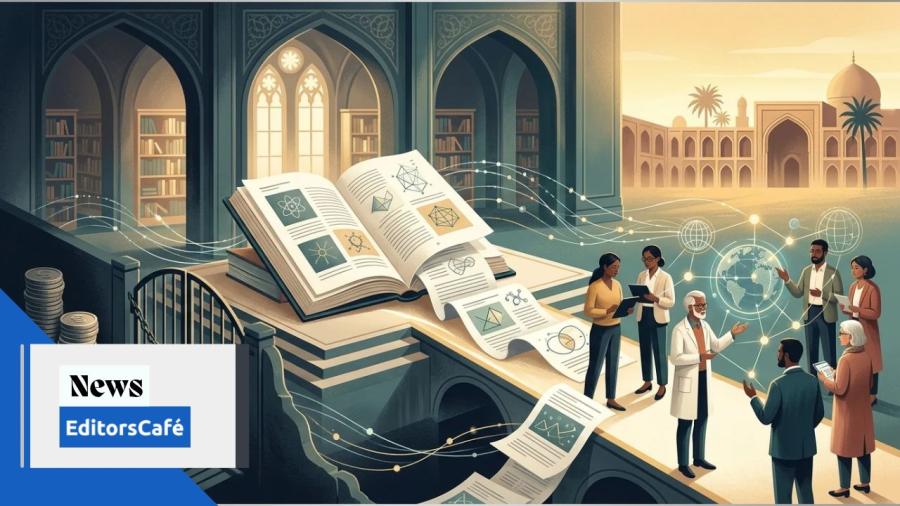
Open access has widened readers’ access to research, but it has also changed who pays. In many models, the cost has moved f...
Read more ⟶
Scholarly publishing is under pressure from several directions at once: the economics of open access, strained peer review, f...
Read more ⟶
The email that came back perfect Consider a hypothetical scenario. Amina, a public-health researcher in Lagos,...
Read more ⟶