Leave a Comment
Your email address will not be published. Required fields are marked *

The Indian scholarly publishing ecosystem is at an inflection point. With thousands of manuscripts submitted each month to medical journals across the country, editors and reviewers are grappling with rising submission volumes, shrinking reviewer pools, and the perennial challenge of maintaining quality and ethical rigour. Artificial Intelligence (AI), particularly the recent wave of generative AI tools, has emerged as a quiet but powerful collaborator in this landscape. These AI tools are reshaping how manuscripts are screened, reviewed, edited, and ultimately published. For Indian medical journals, the opportunity is significant, but so is the responsibility.
A Workflow Under Pressure
Editorial offices in India, like their counterparts elsewhere, follow a familiar journey: submission, technical screening, plagiarism checks, peer review, revisions, copyediting, and production. Each stage demands time, expertise, and attention to detail. Indian journals such as the Indian Journal of Medical Research (IJMR), the National Medical Journal of India (NMJI), the Journal of Postgraduate Medicine, the Indian Journal of Medical Microbiology, and the Journal of the Indian Medical Association (JIMA) manage this workload largely through volunteer editorial boards and modest support staff. Delays in turnaround, inconsistent reviewer responses, and the increasing sophistication of paper mills and predatory submissions have placed considerable strain on the system. This is an area where AI is beginning to make a measurable difference.
AI adds value in the following areas
Modern editorial management systems integrate AI-powered tools that can scan an incoming manuscript within seconds. Plagiarism detection software like iThenticate, widely used by Indian medical journals, has long been the gold standard. However, newer AI tools now perform many of the tasks. These include (i) checking adherence to journal scope and guidelines, (ii) validating reference accuracy, (iii) flagging statistical inconsistencies and paper-mill activity, and (iv) detecting AI-generated content and image manipulation.
For a journal like IJMR, which receives a high volume of submissions across diverse biomedical disciplines, automating this initial gatekeeping allows editors to focus on substantive evaluation rather than procedural checks.
One of the most persistent bottlenecks in Indian medical publishing is finding the right reviewers. AI-driven recommendation engines analyze manuscript abstracts, methodology, and keywords to suggest reviewers whose published work aligns closely with the topic. Tools embedded in platforms such as ScholarOne and Editorial Manager can mine databases like PubMed and Scopus to identify subject experts in seconds. Notably, this type of task previously consumed hours of an editor’s time. For specialty journals like the Indian Journal of Medical Microbiology, this is particularly valuable in finding niché expertise.
A substantial proportion of submissions to Indian journals come from authors for whom English is a second or third language. Excellent science is sometimes obscured by language barriers, leading to rejection at the screening stage. AI-based language editing tools are now available that can polish grammar, improve clarity, and suggest stylistic improvements without altering scientific meaning. The IJMR’s author guidelines explicitly permit the use of AI to improve language, provided such use is documented in the methods section, and AI is not credited as an author. This is a pragmatic stance as it acknowledges the democratising potential of AI while preserving accountability. The SAAP Journal of Integrative Physiology (SJIP), the official journal of the South Asian Association of Physiologists (SAAP), of which the author is the Editor-in-Chief, follows a similar policy on AI.
In production workflows, AI assists with reference linking, XML tagging, image quality assessment, and even automated abstract generation for indexing. Post-publication, AI tools help track citations, social media impact, and post-publication critique through altmetrics platforms. This gives editors a dynamic view of how their content performs.
The Indian Conversation on Ethics
Indian medical journals have been notably thoughtful in articulating their positions on AI. In 2023, an editorial in the Journal of the Indira Gandhi Institute of Medical Sciences reflected candidly on whether AI could ever replace the human peer reviewer. It was concluded that AI may make writing and reviewing faster and better, but true peer review will remain irreplaceable. This stems from the fact that human qualities like judgment, objectivity, impartiality, integrity, ethical reasoning, and attention to detail are of vital importance for conducting balanced, bias-free peerreviews. Notably, India’s NMJI published the World Association of Medical Editors (WAME) recommendations on chatbots and scholarly publications, which was co-authored by Indian editors, has now become a reference point for many regional journals.
The foregoing discussion reflects a broader Indian editorial consensus emerging around three principles highlighted below:
Challenges Specific to the Indian Context
The Indian publishing ecosystem faces some unique considerations. First, infrastructure varies widely.While flagship journals have access to sophisticated editorial management systems, smaller society journals often run on modest digital setups. Bridging this digital divide is essential if the benefits of AI are to be equitably distributed.
Second, multilingual scholarship matters. India’s medical research often draws on regional public health data and community-level studies. AI tools trained predominantly on Western datasets may underperform when handling Indian disease patterns, drug names, or epidemiological context. There is a clear need for India-specific training data and localized AI models.
Third, the cost question looms large. Premium AI tools come with subscription fees that smaller Indian journals may struggle to afford. Open-source alternatives and consortium-based licensing through bodies like the Indian Association of Medical Journal Editors (IAMJE) could help democratise access.
The trajectory is clear: AI will continue to embed itself deeper into editorial workflows, much as plagiarism detection software did two decades ago. The journals that thrive will be those that adopt AI thoughtfully, using it to amplify human expertise rather than replace it. For Indian medical publishing, this means investing in editor training, developing transparent AI-use policies, and actively engaging in international conversations on standards.
Indian editors have a particular opportunity here. With the country’s growing footprint in global biomedical research and its rich tradition of careful, principle-driven editorial scholarship, India can help shape what responsible AI integration looks like for the world. The aim is not to chase efficiency for its own sake, but to free up human attention for what matters most, most notably, rigorous science, ethical conduct, and the careful curation of knowledge that medical publishing exists to serve. Thus, AI, in the end, is a tool. The judgment remains ours!
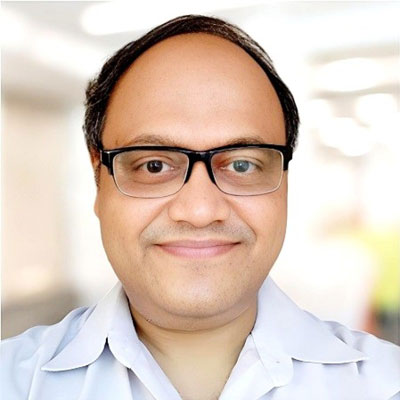
Dr. Kaushik Bharati is a Health Policy Consultant at UNESCO, New Delhi and former Consultant at WHO. He holds a PhD from the Calcutta School of Tropical Medicine, India and post-doctoral fellowship from the Liverpool School of Tropical Medicine, UK. He has held important positions in India and abroad, including the US, UK, France, and Australia. He has expertise in Infectious Diseases, Immunology, and Public Health. His scientific career spans almost three decades, with 123 publications to his credit. He has 29 years of editorial experience and is currently Editor-in-Chief of the SAAP Journal of Integrative Physiology (Colombo, Sri Lanka), the official journal of the South Asian Association of Physiologists (SAAP). He is also Editor-in-Chief of the Journal of Clinical Genetics and Genomics (Windsor, UK). He is Vice President of the Physiological Society of India and member of three societies, including the Infectious Diseases Society of America (Arlington, Virginia), American Society of Clinical Oncology (Alexandria, Virginia), and Royal Society of Tropical Medicine and Hygiene (London). He is also a Fellow of the Royal Society for Public Health (London). He has received 20 awards and distinctions for his research work from India, New Zealand, UK, and USA.
View All Posts by Kaushik BharatiThe views and opinions expressed in this article are those of the author(s) and do not necessarily reflect the official policy or position of their affiliated institutions, the Asian Council of Science Editors (ACSE), or the Editor’s Café editorial team.

The title and section headings intentionally echo the Harry Potter series. The literary allusion is playful, but the mess...
Read more ⟶
Technology has transformed editorial operations by supporting efficient manuscript handling, rigorous quality assurance, an...
Read more ⟶
Every researcher has probably asked themselves the same question before submitting a manuscript: “Which is the highe...
Read more ⟶