
Leave a Comment
Your email address will not be published. Required fields are marked *

The scholarly publishing ecosystem is undergoing a significant transformation, driven by demands for greater speed, transparency, and reproducibility. At the core of this evolution are the intertwined processes of peer review and editorial workflows. While the fundamental goal remains the same, to disseminate high-quality, trustworthy research, the methods and expectations surrounding these processes are rapidly evolving to meet the demands of a modern, high-volume research environment.
Peer review remains the cornerstone of scholarly publishing and the primary mechanism underpinning the validity and reliability of scientific literature. It serves as the main gatekeeper for quality control, ensuring that manuscripts meet rigorous standards of methodological soundness, ethical conduct, scientific relevance, and clarity of presentation.
The current system continues to rely heavily on human peer review, which remains absolutely vital. Editors recruit experienced researchers with relevant domain expertise to critically evaluate submitted manuscripts. Their expertise enables them to:
The judgment, contextual understanding, and ethical awareness contributed by expert reviewers cannot yet be fully replicated by automated systems. Ultimately, trust in published research rests on the intellectual integrity of the experts who evaluate it.
While human expertise is paramount, the rapid growth in manuscript submissions, coupled with increasing reviewer burden, has accelerated the integration of artificial intelligence (AI)–assisted tools into editorial workflows. Importantly, AI is not replacing reviewers, but rather supporting them by improving efficiency and enabling better editorial decision-making.
AI-powered tools are increasingly used to support peer review through:
By automating these preparatory and administrative tasks, AI allows reviewers and editors to focus on the core intellectual evaluation of research, improving both efficiency and review quality.
The editorial role represents the final and most strategic layer of quality control. While peer review addresses the technical merits of a manuscript, editors bring a broader perspective, guided by journal scope, community relevance, and long-term scholarly impact.
Editors are responsible for synthesizing and balancing reviewer feedback, particularly when opinions conflict, while carefully assessing whether a manuscript aligns with the journal’s aims, scope, and target readership. They also play a central role in upholding ethical standards and managing potential conflicts of interest throughout the review process. Drawing on their domain expertise, editors make informed final decisions, which may at times require exercising independent editorial judgment that goes beyond or overrides reviewer recommendations.
In this way, editors act as curators of the scholarly record, shaping the research narrative presented to the scientific community.
A notable trend in scholarly publishing is the significant increase in the global number of reviewers and editors, reflecting exponential growth in research output. However, despite this expansion, persistent challenges such as slow turnaround times, variable review quality, and reviewer fatigue remain largely unresolved.
This paradox highlights several systemic issues:
Addressing these challenges requires more than increasing participation. The evolving expectations of scholarly publishing demand structural reform, including the adoption of open peer review models, improved reviewer recognition systems
(Publons / Web of Science Reviewer Recognition), and the responsible integration of AI into editorial decision-making.
Only by enhancing the experience, efficiency, and recognition of both reviewers and editors can scholarly publishing sustainably maintain quality in an era of ever-increasing global research output.
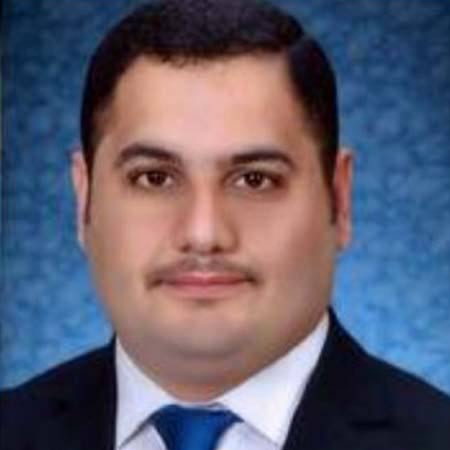
Dr. Ali H. Wheeb is an Associate Professor at the College of Engineering, University of Baghdad, Iraq. He received a Ph.D. Degree with Graduate on Time Award (Ph.D. with GoT) in Electrical and Electronic Engineering from the University of UKM, Malaysia. His research interests include UAV Networks, UAV, Networking, IoT, MANET, FANET, Wireless Communication, Routing protocol, Machine learning (ML), Reinforcement Learning (RL), Q-learning, Deep Q-Network (DQN), Mobility Models, and Simulation Tools (NS-2, NS-3, ns-gym). Asst. Prof. Dr. Ali authored 20 research papers and books. Furthermore, he has served as a reviewer for 110 journals and conferences, reviewing over 765 papers. Further, he was appointed as chair of the organization at the DECA 2022 international conference and chair of publication at the ICIDIT 2023 and ICBIS 2024 international conferences. Asst. Prof. Dr. Ali was selected as a program committee member (PCM) and technical committee member (TCM) at 50 international conferences. Further, Prof. Ali was appointed as an Editorial Board Member in several international journals. Moreover, Prof. Ali has received several Awards, including the Young Scientist Award in the International Scientist Awards 2022 on Engineering, Science, and Medicine from INSO AWARDS, an Excellent Reviewer Award from WoS in 2023, and a GoT Award from UKM in 2024. In Addition, Prof. Ali is a member of several organizations such as the Iraqi Engineering Union, European Alliance for Innovation (EAI), Asian Council of Science Editors (ACSE), Franklin London Journals Press, Elsevier, IGI, Springer Nature, STM, and Nano-Science & Technology Consortium (NSTC). Moreover, Asst. prof. Dr. Ali participates in the conduct of the Times Higher Education (THE) World University rankings (2024, 2025) and QS World University rankings (2025).
View All Posts by Ali Hussein WheebThe views and opinions expressed in this article are those of the author(s) and do not necessarily reflect the official policy or position of their affiliated institutions, the Asian Council of Science Editors (ACSE), or the Editor’s Café editorial team.


The email that came back perfect Consider a hypothetical scenario. Amina, a public-health researcher in Lagos,...
Read more ⟶
Open access (OA) publishing is often presented as a way to make scholarly knowledge more widely available. But for researcher...
Read more ⟶
Introduction Research integrity means conducting research with honesty, clarity, accountability, and ethical respo...
Read more ⟶