What has 2025 Taught Us about Scholarly Publishing in India?

Anyone working in the research space in India will know that2025 felt like a year of uncomfortable clarity. Not because everything changed overnight, but because trends that were already forming became impossible to ignore. The “publish or perish” engine didn’t slow down. But it did start to sound different, louder on integrity, more demanding on transparency, and increasingly shaped by platforms, policies, and public expectations.Here are the biggest lessons 2025 taught us about scholarly publishing in India:
Volume isn’t the same as impact
India’s research output has been rising steadily for years, and 2025continued that trajectory. But the mood has shifted. Administrators and promotion committees, who are often blamed for pushing quantity, began facing stronger pressure from within institutions to emphasize quality, relevance, and reproducibility. This wasn’t idealism; it was necessity.
Why? Everyone can feel the costs of “paper inflation” now, which include overstretched peer reviewers, questionable journals, citation games, and short-lived studies that don’t translate into usable knowledge. In 2025, more people openly acknowledged a hard truth: that a system optimized purely for publication counts eventually produces a credibility deficit. Thus, it is clearly evident that India doesn’t just need fewer papers; it needs more credible papers. And credibility is earned through transparency, rigor, and community trust, not through volume alone.
Research integrity became a mainstream topic, not a niché concern
For a long time, integrity conversations in India lived in small circles, such as ethics committees, a few journal editors, and the occasional public scandal. In 2025, integrity moved into the main arena.
The following three forces pushed it there:
- Plagiarism detection: This became routine, not just for theses, but increasingly for manuscripts and conference submissions.
- Retractions: These, along with editorial warnings, became more visible, which were amplified by social media and indexing databases.
- Predatory publishing: This became harder to ignore, especially when faculty and students realized that “easy acceptance” could carry long-term reputational harm.
This didn’t mean the system magically cleaned itself up. But it did mean that integrity became a career-level conversation. Therefore, integrity isn’t an ethics poster; it’s a career skill. Knowing how to assess journals, report methods properly, manage authorship fairly, and keep clean data trails is now part of being a professional researcher.
Open access stopped being an ideology and became infrastructure
In 2025, open access in India felt less like a philosophical debate (Should access to research be free?) and more like an operational question (How can it be funded and implemented sensibly?).
Although Indian authors increasingly faced the real-world trade-offs, a wind of change came in open access publishing. Open access became a workflow problem, which was solved through collective efforts; universities started experimenting with stronger repository policies, journal editors became more pragmatic about preprints, and researchers became more conscious of rights retention and licensing. Therefore, open access isn’t “a movement” anymore. It’s plumbing. Whoever builds the best plumbing (policies, tools, and funding mechanisms) will shape how Indian scholarship travels.
Peer review remained essential but visibly strained
Peer review in 2025 did what it always does. It quietly held up the building while everyone complained about the architecture. But the strain became harder to hide.
India’s reviewer pool is large, but reviewer availability isn’t. Many active researchers juggle teaching, administration, clinical work, and grant pressure. Review requests pile up; quality varies; turnaround time stretches. Editors increasingly relied on “repeat reviewers,” creating a fatigue loop. At the same time, there was a growing push for clearer reviewer guidelines,better editorial triage, and more recognition for reviewers as contributors to scholarship. Therefore, it should be kept in mind that peer review won’t be “fixed” by scolding reviewers. It will improve through better editorial filtering, smarter matching, incentives, and cultural shifts that treat reviewing as part of scholarly citizenship, not unpaid invisible labor.
Tools started changing behavior, not just speed
By 2025, AI tools were no longer “novel.” They were normal and were used for language polishing, summarizing papers, structuring abstracts, formatting references, generating visuals, and even assisting in statistical scripting.
This came with a new tension: tools make it easier to write, but they also make it easier to produce convincing nonsense. Journals and institutions increasingly asked for disclosures, and many researchers discovered they needed new literacy:
- How to use AI ethically, without fabricating citations or masking poor methods.
- How to ensure that assistance doesn’t become authorship fraud.
- How to maintain accountability for every claim in the paper.
Thus, AI didn’t change the goal (truth). It changed the speed (and therefore the risk). In 2025, the research community learned that governance and norms must keep pace with tooling, otherwise credibility suffers.
‘Prestige’ got more complex than just the impact factor
Indian academia has long had a prestige hierarchy, often driven by journal impact factors and indexing status. However, in 2025, prestige became more multi-dimensional. Researchers began weighing visibility, credibility, speed, accessibility, affordability, and policy alignment. This meant that the publishing decision became less like picking the highest impact factor possible and more like a strategic choice based on constraints and goals. Thus, publishing became portfolio management. Researchers increasingly optimized for a mix, including some prestige journals, some field-specific credible outlets, and some open dissemination, depending on audience and purpose.
India’s research story is increasingly judged by translation, not just publication
Finally, 2025 made one theme louder: the world is watching not just what India publishes, but what India does with what it publishes. Whether it’s healthcare, climate, agriculture, education, or AI, India’s most valuable research often sits at the intersection of science and public need.
In 2025, more stakeholders demanded evidence of translation, such as clinical relevance, policy utility, community impact, reproducibility, and data sharing. This doesn’t mean every paper must become a policy brief. But it does mean that a research ecosystem gains legitimacy when it reliably produces knowledge that can be used. It follows that impact is becoming less about citations and more about outcomes. Therefore, Indian publishing will increasingly be evaluated through the lens of utility, trust, and societal benefit.
Key takeaway from 2025
If you had to compress 2025 into one sentence, it might be this: India’s scholarly publishing ecosystem is growing up, much faster than its systems are.
The demand for credibility, openness, and impact is rising. The tools are accelerating. The stakes, including public trust, global reputation, and national progress, are higher. 2025 didn’t “solve” these issues, but it made them impossible to ignore.
The opportunity now is huge. India can shape a rigorous publishing culture without being elitist, open without being exploitative, fast without being sloppy, and ambitious without being brittle. And if 2025 taught us anything, it’s that the next phase won’t be won by publishing more. It will be won by publishing better!
Keywords
Scholarly publishing in India Research integrity Open access Peer review Publication quality vs quantity Predatory journals Research credibility AI in research Research impact and translation Journal prestige Transparency in research Research reproducibility Publication ethics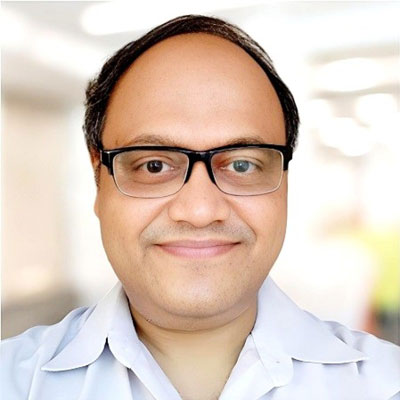
Dr. Kaushik Bharati is a Health Policy Consultant at UNESCO, New Delhi and former Consultant at WHO. He holds a PhD from the Calcutta School of Tropical Medicine, India and post-doctoral fellowship from the Liverpool School of Tropical Medicine, UK. He has held important positions in India and abroad, including the US, UK, France, and Australia. He has expertise in Infectious Diseases, Immunology, and Public Health. His scientific career spans almost three decades, with 123 publications to his credit. He has 29 years of editorial experience and is currently Editor-in-Chief of the SAAP Journal of Integrative Physiology (Colombo, Sri Lanka), the official journal of the South Asian Association of Physiologists (SAAP). He is also Editor-in-Chief of the Journal of Clinical Genetics and Genomics (Windsor, UK). He is Vice President of the Physiological Society of India and member of three societies, including the Infectious Diseases Society of America (Arlington, Virginia), American Society of Clinical Oncology (Alexandria, Virginia), and Royal Society of Tropical Medicine and Hygiene (London). He is also a Fellow of the Royal Society for Public Health (London). He has received 20 awards and distinctions for his research work from India, New Zealand, UK, and USA.
View All Posts by Kaushik BharatiDisclaimer
The views and opinions expressed in this article are those of the author(s) and do not necessarily reflect the official policy or position of their affiliated institutions, the Asian Council of Science Editors (ACSE), or the Editor’s Café editorial team.




Prof. Dr. Maan Abdul Azeez Shafeeq
22 December, 2025Tools started changing behavior, not just speed
By 2025, AI tools were no longer “novel.” They were normal and were used for language polishing, summarizing papers, structuring abstracts, formatting references, generating visuals, and even assisting in statistical scripting.
This came with a new tension: tools make it easier to write, but they also make it easier to produce convincing nonsense. Journals and institutions increasingly asked for disclosures, and many researchers discovered they needed new literacy:
How to use AI ethically, without fabricating citations or masking poor methods.
How to ensure that assistance doesn’t become authorship fraud.
How to maintain accountability for every claim in the paper.
Thus, AI didn’t change the goal (truth). It changed the speed (and therefore the risk). In 2025, the research community learned that governance and norms must keep pace with tooling, otherwise credibility suffers.
‘Prestige’ got more complex than just the impact factor
Indian academia has long had a prestige hierarchy, often driven by journal impact factors and indexing status. However, in 2025, prestige became more multi-dimensional. Researchers began weighing visibility, credibility, speed, accessibility, affordability, and policy alignment. This meant that the publishing decision became less like picking the highest impact factor possible and more like a strategic choice based on constraints and goals. Thus, publishing became portfolio management. Researchers increasingly optimized for a mix, including some prestige journals, some field-specific credible outlets, and some open dissemination, depending on audience and purpose.