
Leave a Comment
Your email address will not be published. Required fields are marked *

Open access (OA) publishing has transformed scholarly communication worldwide, promising broader dissemination of knowledge and more equitable access to scientific literature. Yet the global movement toward openness is not experienced uniformly. In countries like Iran, where researchers operate within complex political, economic, and infrastructural constraints, open access presents both significant opportunities and distinctive challenges. Understanding Iran’s OA landscape requires examining not only the scholarly culture but also the structural barriers that shape how researchers publish, access, and share knowledge.
A Growing Embrace of Open Access
Despite numerous obstacles, Iranian scholars have increasingly embraced open access principles. Iran has a large and active research community relative to its population size, and for many academics, OA publishing offers a vital route to increase global visibility, improve citation impact, and bypass paywalls that restrict access to international scholarship. Many universities encourage publication in reputable open-access journals, and publicly funded research bodies promote sharing findings more broadly.
Locally, Iranian journals, many of which are university-affiliated, have adopted open access models more rapidly than many Western counterparts. This trend is partly motivated by efforts to improve international rankings and partly by longstanding cultural values emphasizing the diffusion of knowledge. As a result, a significant portion of Iranian academic output is freely available online, often through institutional repositories or locally maintained journals that do not charge authors article-processing charges (APCs). These journals serve as essential platforms for emerging researchers who cannot afford international publication fees.
For Iranian researchers looking outward, the economic realities of OA publishing can be daunting. Many leading international OA journals require APCs ranging from several hundred to several thousand dollars, a cost nearly impossible for most Iranian academics to pay. Currency devaluation, inflation, and fluctuating exchange rates magnify the burden, turning even modest fees into unreachable amounts.
Funding bodies in Iran rarely cover APCs, and university research budgets are often insufficient or restricted by sanctions. While some publishers offer fee waivers or discounts to researchers from low-income countries, Iran is frequently excluded because it is classified as an upper-middle-income country. Researchers face a paradox: OA is celebrated for democratizing knowledge, yet high publication fees reinforce inequalities for academics in sanctioned or economically pressured nations.
Sanctions and Restricted Access
Predatory Journals and the OA Dilemma
The global expansion of OA has been accompanied by a rise in predatory journals, publications that exploit the OA model by charging fees without providing legitimate editorial or peer-review services. Iranian researchers, like many scholars worldwide, are affected. Early-career researchers, under pressure to publish internationally but facing financial and political barriers, may be more susceptible to deceptive outlets promising quick acceptance at low cost.
This dynamic has triggered reputational harm for Iranian academia, as international evaluators sometimes conflate legitimate local OA journals with predatory ones. Iranian universities have responded by creating strict publication quality guidelines and increasing oversight of academic output. The issue illustrates how structural inequalities within global scholarly publishing make certain communities more vulnerable in the open-access ecosystem.
Local OA Initiatives: Strengths and Limitations
To counter these obstacles, Iran has developed vibrant local OA networks. Many universities host digital repositories offering free access to theses, dissertations, and faculty publications. National databases aggregate journal articles across disciplines, facilitating internal scholarly communication. These infrastructures create a valuable ecosystem for local and regional research dissemination.
However, limitations remain. Many repositories lack long-term funding, modern interfaces, or multilingual accessibility. The absence of comprehensive metadata standards weakens international discoverability. Iranian OA journals often struggle to meet indexing criteria for major global databases, limiting their international reach. Despite strong local commitment, resource constraints hinder alignment with global best practices in digital preservation, open peer review, and research data management.
Cultural and Ethical Dimensions of OA
Iranian researchers experience open access at the intersection of cultural expectations and scientific norms. The country has a strong tradition of valuing education, and the ethos of sharing knowledge resonates deeply with academic culture. Yet the pressure to publish internationally, driven by promotion requirements and global ranking systems, can overshadow local scholarly needs.
This tension influences how researchers perceives OA. Many see it as a path to global integration and scientific recognition, while others worry that OA expectations accelerate the “publish or perish” mentality. The push for openness also raises concerns about intellectual property rights and potential scientific exploitation, especially when Iranian researchers contribute to global knowledge but remain marginalized in international collaborations.
Looking Forward: Building a More Inclusive Open Access Future
The realities of open access in Iran demonstrate that the global movement toward openness cannot be one-size-fits-all. For OA to fulfill its promise of equity, international stakeholders must address the structural inequities shaping scholarly participation. Publishers could expand waiver programs, adjust fee structures, or adopt more flexible payment mechanisms for researchers in sanctioned economies. Global academic organizations can advocate for depoliticized scholarly exchange and ensure sanctions do not impede scientific collaboration.
At the national level, Iran can continue strengthening its OA infrastructure, investing in digital repositories, improving journal standards, and fostering regional networks. Training programs on journal quality, research integrity, and OA publishing strategies would better equip scholars to navigate the complexities of the global system.
Ultimately, open access should empower researchers everywhere, not reflect existing inequalities. Iran’s experience highlights both the transformative potential of OA and the need for a more inclusive, context-sensitive global approach. By addressing structural barriers and enhancing local capacities, the international community can move closer to a publishing environment where openness truly serves all.
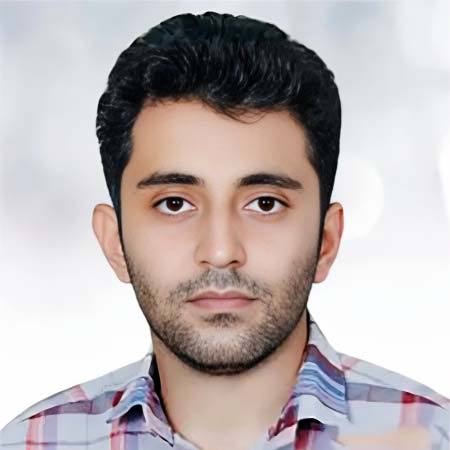
Dr. Arash Pakravesh is an Adjunct Professor at Bu Ali Sina University, Hamedan, Iran, specializing in Physical Chemistry. He earned his Ph.D. in Physical Chemistry from Bu Ali Sina University and has since focused on advancing research and education in the fields of chemistry, applied chemistry, and related interdisciplinary areas. His work encompasses both theoretical and experimental approaches, contributing to a deeper understanding of chemical phenomena and their practical applications.
View All Posts by Arash PakraveshThe views and opinions expressed in this article are those of the author(s) and do not necessarily reflect the official policy or position of their affiliated institutions, the Asian Council of Science Editors (ACSE), or the Editor’s Café editorial team.

For many journal editors, inclusion in an international indexing database is the culmination of years of hard work. It refle...
Read more ⟶
The title and section headings intentionally echo the Harry Potter series. The literary allusion is playful, but the mess...
Read more ⟶
Technology has transformed editorial operations by supporting efficient manuscript handling, rigorous quality assurance, an...
Read more ⟶