
Leave a Comment
Your email address will not be published. Required fields are marked *
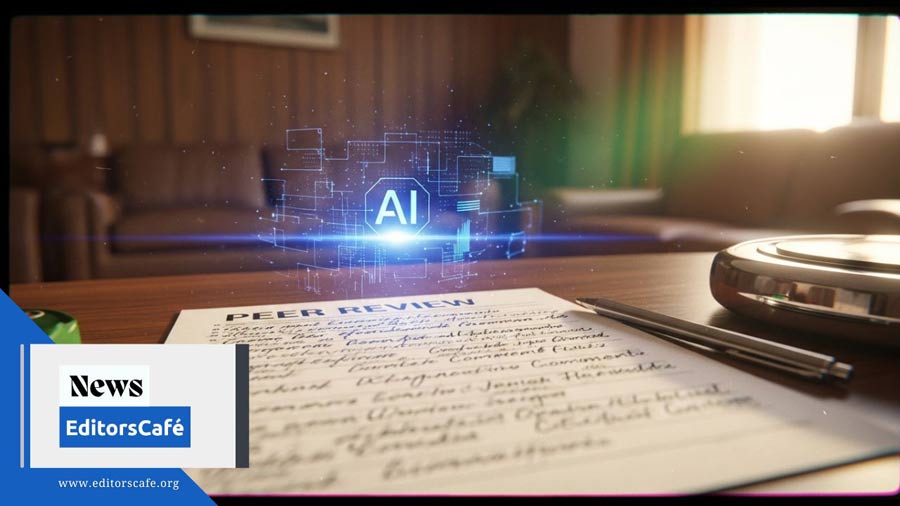
2025 marked a critical year in academic publishing, particularly in how we rethink peer review processes. On one hand, reviewer fatigue continued to rise as the burden of peer review became increasingly concentrated on a small group of active researchers. According to a report launched by IOP Publishing in 2024,while 30% of reviewers from high-income countries reported receiving too many requests, only 10% from low- and middle-income countries reported the same burden. On the other hand, the rapid spread of AI-assisted screening and automated evaluation tools began reshaping the very nature of peer review.
As I emphasized in my featured video for Peer Review Week 2025: "AI belongs in supporting tasks such as screening and linguistic clarity, but it does not belong in interpretive judgment or the ethical reasoning that peer review fundamentally requires."
This perspective sat at the heart of the transformation we witnessed throughout 2025.
This year also revealed that journals in the Global South face even greater challenges in finding qualified reviewers, while early-career researchers still lack systematic training in peer review. My work in Türkiye and neighboring countries has shown just how visible this gap has become.
Since the beginning of 2025, artificial intelligence has entered the peer review ecosystem as an "unavoidable component." Major publishers, Elsevier and Wiley, openly acknowledge that AI tools can accelerate editorial workflows. Similarly, Nature's editorial team has stressed that transparent AI use is becoming essential for publishing.
Yet despite these developments, a critical distinction remains valid both ethically and methodologically: AI provides speed, but it doesn't generate scientific judgment.
The Stanford AI Index Report 2025 and OECD AI Observatory data show that AI's risks of producing hallucinations, reproducing biases, and making context-free recommendations remain serious. These findings reinforce that AI can support but not replace expert judgment. It is merely an assistant that can reduce the workload.
Why Reviewer Training Became Impossible to Ignore
This year also made visible the significant training gap faced by early-career researchers. While most universities and research institutions acknowledge that peer review is a critical component of scientific careers, they don't provide structured programs for it.Most of the ECRs enter the peer review process without guidance on how to evaluate methodology, recognize ethical concerns, or write constructive comments.
To fill this global need, I developed the Peer Review Labfor young scholars working in foreign language education and related fields. It offers structured modules that guide participants through the fundamentals of evaluation, research ethics, interpretive judgment, and reflective reviewing practices. The program encourages participants to see peer review not only as a professional duty but also as an opportunity for learning and intellectual growth.
Global South Realities: Expanding Workloads, Shrinking Reviewer Pools
Throughout 2025, Global South journals faced a challenging picture:
My conversations with editors in the region confirm these patterns: peer review workload remains concentrated among a small group of active researchers, while systemic barriers, including biased reviewer selection, inadequate incentives, and unequal access to recognition systems, continue to widen inequalities in the Global South.
In this context, Reviewer Credits plays a critical role in reducing these inequalities. The peer review verification and scoring system ensures researcher visibility and supports the creation of an academic service portfolio. Being part of international platforms also helps researchers gain exposure to editorial standards, connect with global networks, and learn from broader disciplinary communities. These opportunities are particularly valuable for early-career scholars navigating the complexities of academic publishing.
Looking Ahead
2025 taught us that the future of peer review relies on striking a thoughtful balance between technological innovation and human expertise. While it is clear that AI tools bring speed and efficiency, ethical decisions can only be made by humans.
For a fairer and more inclusive peer review system in the years ahead:
Peer review continues to be the backbone of scholarly communication. Strengthening it requires collective commitment, transparency, and a shared understanding of what responsible evaluation should look like in the AI era. As we move toward 2026, the real question is this: How will we preserve and develop the culture of peer review in this ecosystem transformed by artificial intelligence?
Every answer to this question will directly shape the future of the academic world.

Esma Şenel is a Ph.D. candidate in English Language Education at Çanakkale On Sekiz Mart University, Turkey, and a lecturer at İzmir Democracy University’s School of Foreign Languages. With academic degrees earned with honors and TESOL Advanced Practitioner status, she brings a strong foundation to her work in language education, teacher training, and academic research. Her research focuses on academic writing, educational technology, test anxiety, intercultural competence, and international student mobility. She actively contributes to the European Network on International Student Mobility (COST Action CA20115) and serves as a peer reviewer for international journals. Esma is also developing a peer review training course for early-career educators.
View All Posts by Esma SenelThe views and opinions expressed in this article are those of the author(s) and do not necessarily reflect the official policy or position of their affiliated institutions, the Asian Council of Science Editors (ACSE), or the Editor’s Café editorial team.


Every researcher has probably asked themselves the same question before submitting a manuscript: “Which is the highe...
Read more ⟶
In contemporary scholarly publishing, visibility is often discussed as if it were merely a technical achievement: obtain an ...
Read more ⟶
As a Professor at Balochistan University of Information Technology, Engineering and Management Sciences (BUITEMS), Quetta, ...
Read more ⟶