
Leave a Comment
Your email address will not be published. Required fields are marked *
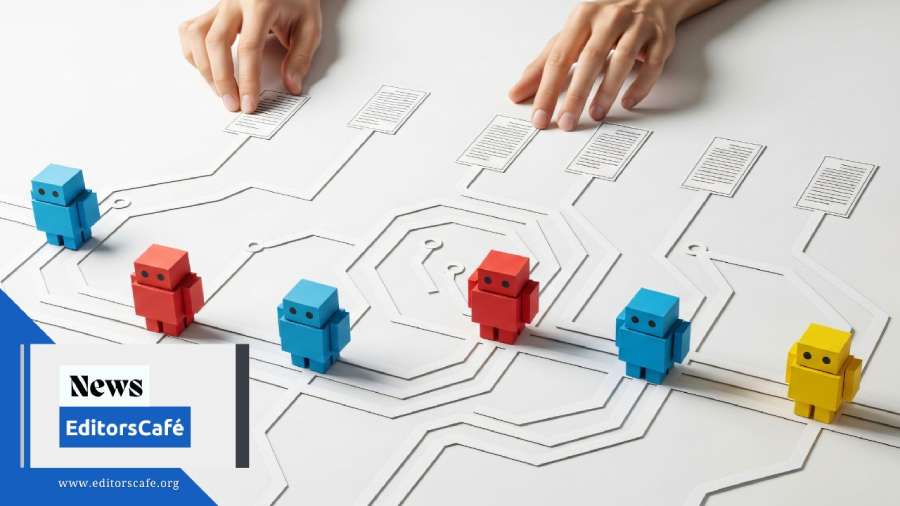
The year 2025 has been transformative for scholarly publishing. Rapid advances in artificial intelligence (AI), coupled with evolving expectations for open access and research integrity, reshaped editorial workflows worldwide. For journals, particularly in the Global South, these changes brought both opportunities and challenges. As a researcher, reviewer, and contributor, I witnessed firsthand how AI and technological innovations altered peer review, editorial processes, and the broader research ecosystem.
This reflection highlights key lessons from 2025, emphasizing responsible AI integration, human-centered workflows, and the importance of equity across diverse journal contexts.
AI Became a Core Editorial Tool
AI-assisted tools, plagiarism detectors, language enhancers, technical checks, and reviewer recommendation systems transitioned from optional to standard components of editorial workflows. Large publishers leveraged AI to triage manuscripts, check compliance with journal guidelines, detect AI-generated text, and improve readability.
However, implementation varied widely. Journals in well-resourced regions could adopt advanced AI platforms with seamless integration, while many Global South journals faced challenges, including limited infrastructure, high costs, and minimal training for editorial teams. This highlights a critical lesson: AI adoption must be paired with capacity-building and equitable access to avoid exacerbating global disparities.
Peer Review: Faster but More Complex
AI improved efficiency in peer review, from matching manuscripts to reviewers to summarizing reviewer comments. Yet, complexity also increased. Reviewers sometimes relied excessively on AI-generated feedback, raising concerns about authenticity. Editors had to discern between genuine expertise and machine-assisted input, while new forms of AI-assisted misconduct emerged. The most effective systems combined AI efficiency with strong human oversight. Clear guidelines on AI use and transparent editorial policies proved essential for maintaining trust in the peer review process.
Open access (OA) continued to expand, but APCs (Article Processing Charges) remained a barrier for many researchers. Positive trends included APC waivers for Global South authors, collaborative regional funding models, and growing visibility for diamond OA journals. AI-supported editorial systems reduced operational costs, helping smaller journals participate in OA publishing. Still, achieving equitable open access requires sustainable funding, infrastructure support, and collaboration across institutions. Technology alone cannot address structural inequalities.
Integrity Challenges in a Generative AI Era
Generative AI tools introduced novel integrity concerns in 2025, including undisclosed AI-generated manuscripts, fabricated data, and sophisticated image manipulation. “Paper mills” leveraging AI complicated editorial oversight further. Journals responded by implementing mandatory AI-use disclosures, enhanced image forensics, anomaly detection in datasets, and inter-journal collaboration to identify suspicious patterns. A key takeaway is that technology-driven misconduct requires technology-enabled solutions, supported by human judgment and ethical oversight.
Skill Development for Editors
While AI improved efficiency, it underscored the need for advanced editorial skills. Editors now require the ability to:
In 2025, journals investing in editor training benefited from smoother workflows, higher-quality output, and better decision-making.
Visibility and Equity for Global South Journals
Despite technological gains, many Global South journals struggled with discoverability, attracting international submissions, and maintaining consistent publication schedules. AI can aid visibility through automated editing, reviewer recommendation, and workflow optimization, but uptake remains uneven. Visibility is not merely technical; it is structural. Regional collaboration, capacity-building, and equitable access to tools are essential to ensure that journals worldwide participate fully in global scholarly communication.
A Human-Centered Future
Even with AI, the heart of scholarly publishing remains human:
AI enhances workflows but cannot replace the relational, ethical, and intellectual dimensions of publishing. The most successful editorial models integrate AI as a supportive tool rather than a substitute for human expertise.
Reflections for the Future
2025 has demonstrated that AI is now a permanent fixture in editorial workflows. Its impact on efficiency, peer review, and accessibility is undeniable, yet it has also exposed inequities, new forms of misconduct, and the urgent need for skill development.
Looking forward, the priority must be a balanced, inclusive, and human-centered approach, one that empowers editors, authors, and journals across regions while safeguarding integrity, equity, and open access. As we move into 2026, the lessons of 2025 remind us that the future of scholarly publishing relies not only on technology but on how responsibly, ethically, and collaboratively we use it.

Melaku Tafese Awulachew is a food processing and technology researcher at the Ethiopian Institute of Agricultural Research (EIAR), specializing in sustainable food engineering, postharvest loss reduction, and smart packaging. He holds an M.Sc. in Chemical Engineering (Food Engineering) from Addis Ababa University. Melaku has authored seven books and over seventy peer-reviewed publications and serves as a reviewer for several international journals. His work promotes science-based innovation and sustainable food systems.
View All Posts by Melaku Tafese AwulachewThe views and opinions expressed in this article are those of the author(s) and do not necessarily reflect the official policy or position of their affiliated institutions, the Asian Council of Science Editors (ACSE), or the Editor’s Café editorial team.


Scholarly publishing is under pressure from several directions at once: the economics of open access, strained peer review, f...
Read more ⟶
The email that came back perfect Consider a hypothetical scenario. Amina, a public-health researcher in Lagos,...
Read more ⟶
Open access (OA) publishing is often presented as a way to make scholarly knowledge more widely available. But for researcher...
Read more ⟶